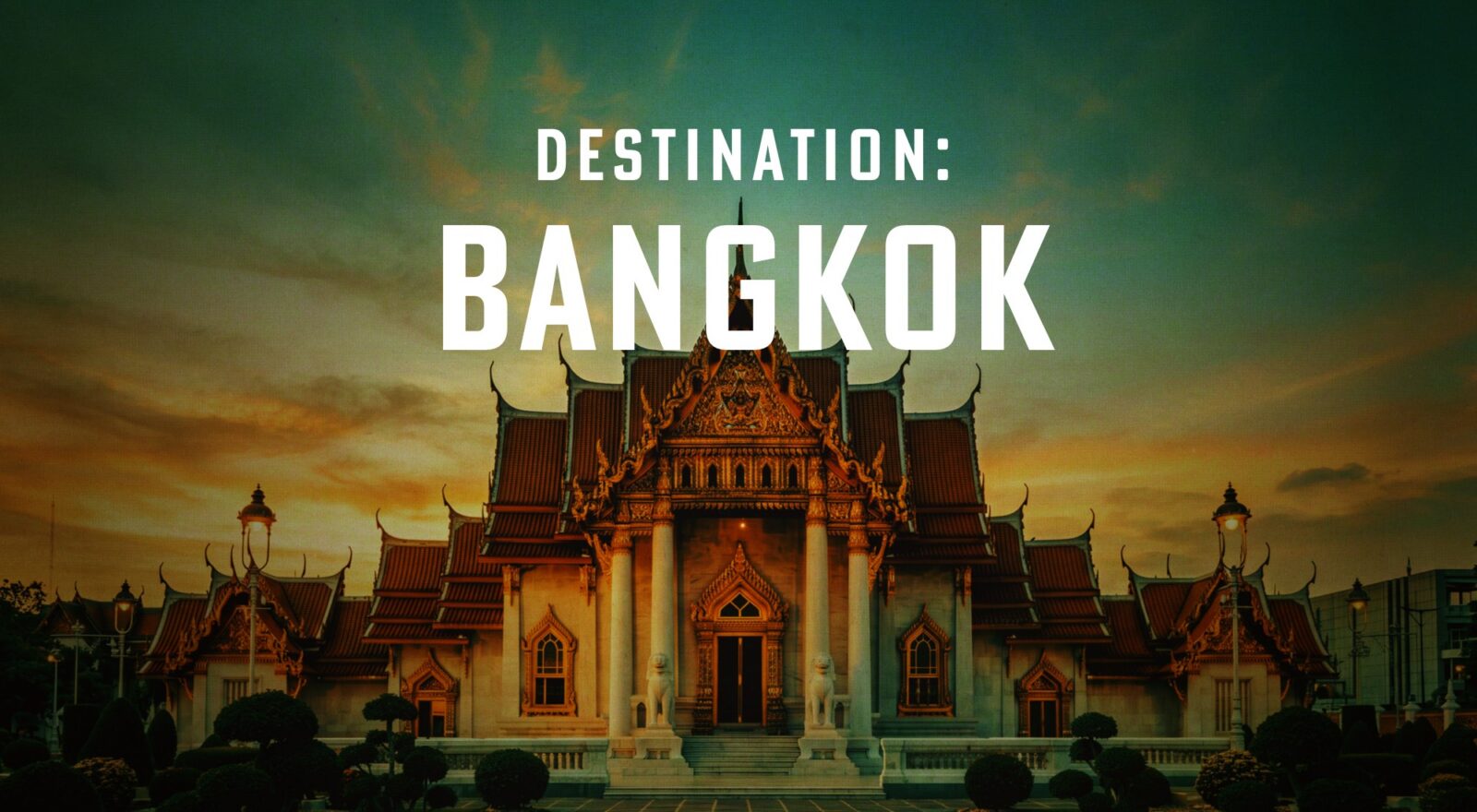
Bangkok was perfect for CHOKE POINT because it contains so many different worlds in one city. It can be glamorous and sophisticated one moment, crowded and chaotic the next. You have royal palaces, luxury hotels, private clubs, enormous parks, neon nightlife, ancient neighborhoods, river traffic, working docks, markets, and canals — often only minutes apart.
For a thriller, that gave me an extraordinary canvas. It also fit the larger geopolitical story. Thailand occupies an incredibly important position in Southeast Asia, and Bangkok is the country’s political, economic, and cultural center. If someone wanted to create fear, confusion, and political pressure inside Thailand, Bangkok would be the obvious place to do it.
What I especially liked was being able to show readers different layers of the city — not only the Bangkok most tourists recognize, but some of the places underneath it.
Here are eight stops from CHOKE POINT worth knowing.
1. SKY BAR AT LEBUA
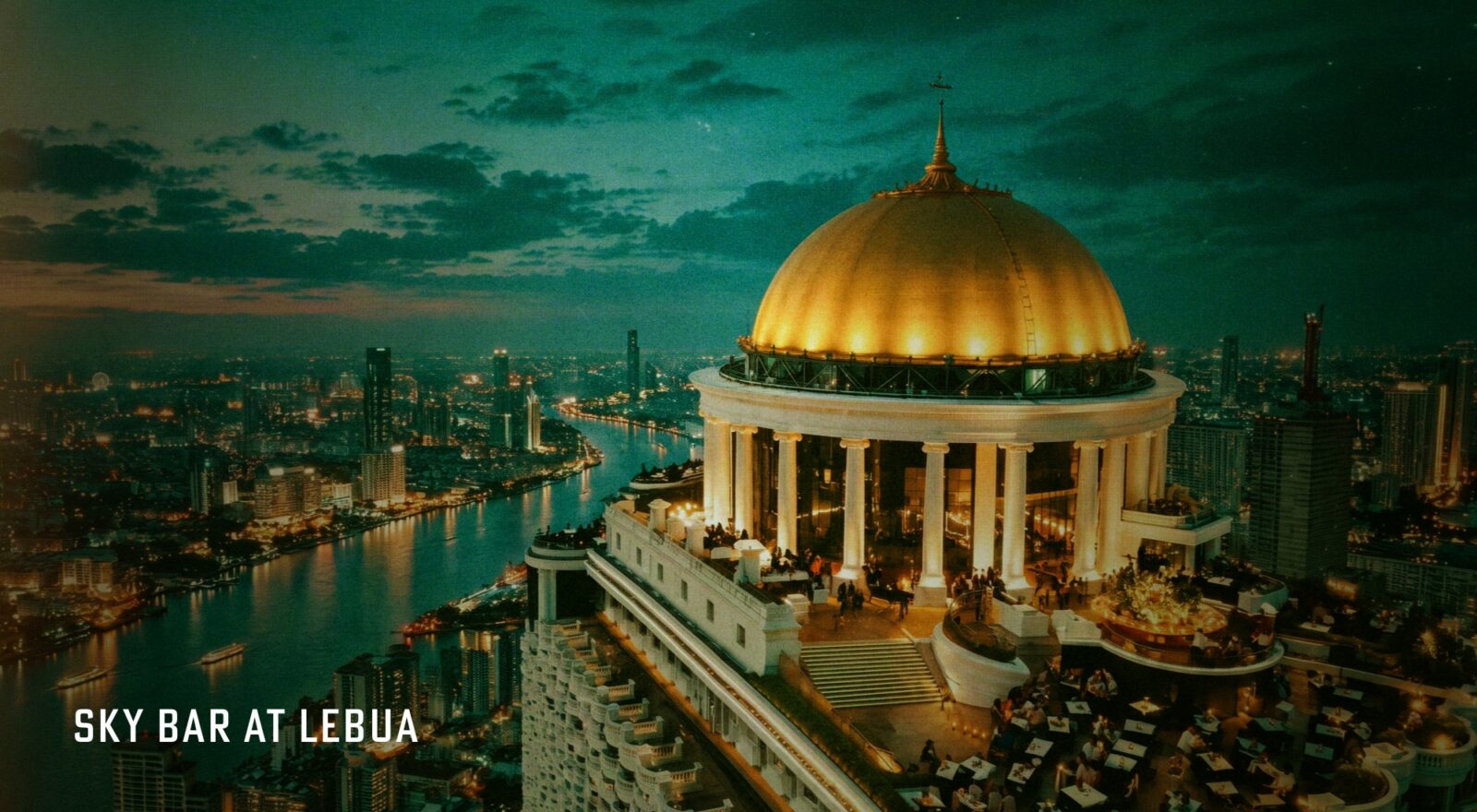
Sky Bar is one of the first places readers encounter in CHOKE POINT. Kevin Koebler is high above Bangkok, looking out over the city as the novel’s first major operation unfolds below.
I wanted the scene to be beautiful and luxurious while something terrible was about to happen below.
The real Sky Bar sits on the 64th floor of State Tower. Open to the night sky, it offers a sweeping view across Bangkok and the Chao Phraya River.
It was exactly the kind of place I could imagine someone sitting above the city and feeling, however wrongly, as though he controlled everything beneath him.
2. CHINATOWN — YAOWARAT + TEENS OF THAILAND
Bangkok’s Chinatown became important to me because I wanted a setting that felt crowded, atmospheric, slightly mysterious, and completely different from the city’s polished luxury districts.
The neighborhood is nearly as old as Bangkok itself. When King Rama I established the new capital in 1782, the Chinese community living near the future Grand Palace was relocated to the area that became today’s Chinatown. Yaowarat remains one of the city’s great commercial and food districts, especially after dark.
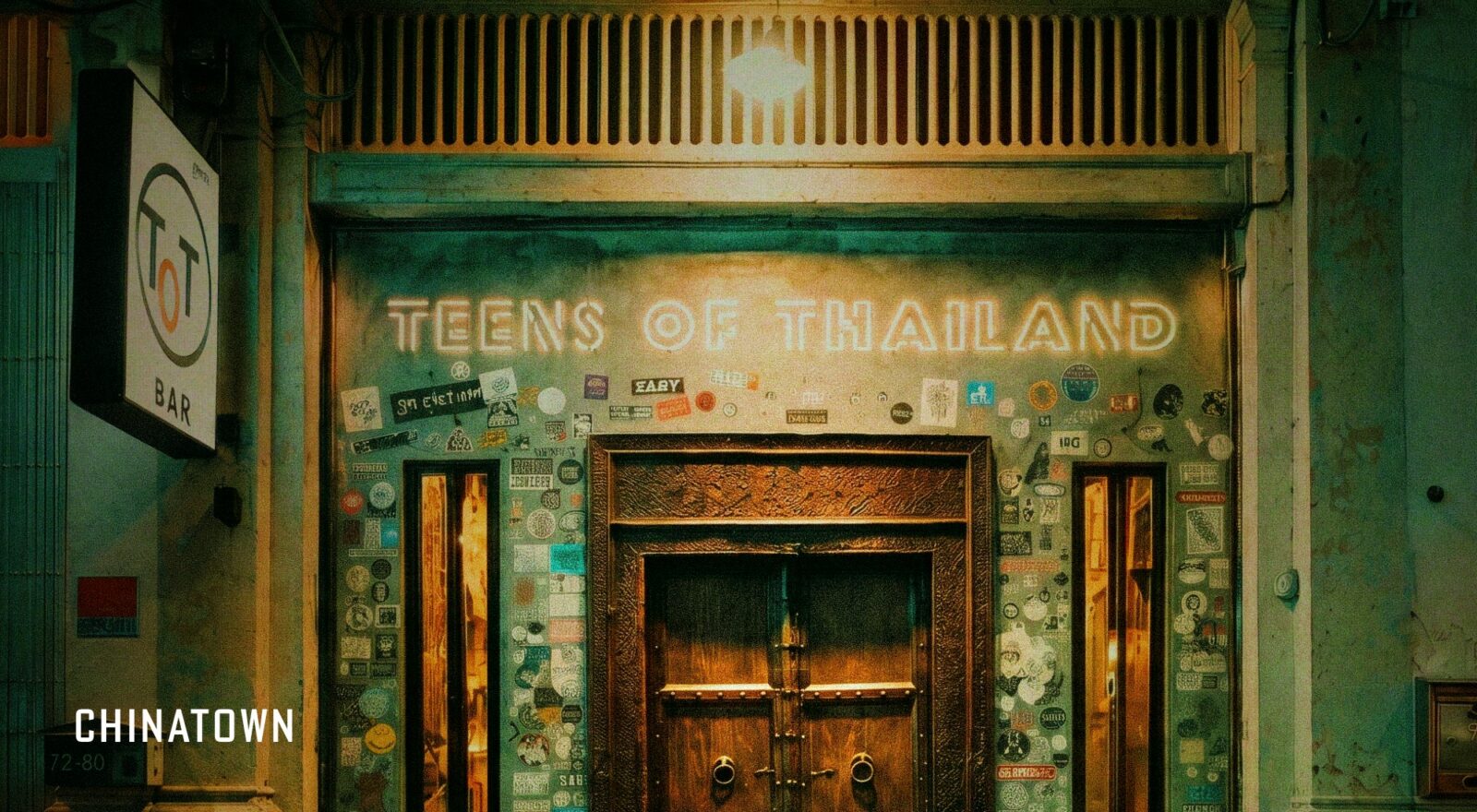
In CHOKE POINT, Koebler attends a clandestine meeting near Yaowarat at Teens of Thailand, which despite its disreputable-sounding name is a real Bangkok gin bar.
Tucked into an old shophouse on Soi Nana at the edge of Chinatown, the tiny bar helped make the surrounding lane one of Bangkok’s better-known cocktail destinations.
I loved the fact that someplace with such an outrageous name actually existed. The surrounding neighborhood also gave me everything a thriller writer could want. Old buildings and narrow streets are packed with people, food, shops, and neon — and there are countless ways for someone to blend in or disappear.
3. PAK KHLONG TALAT FLOWER MARKET
This was one of my favorite discoveries while researching Bangkok.
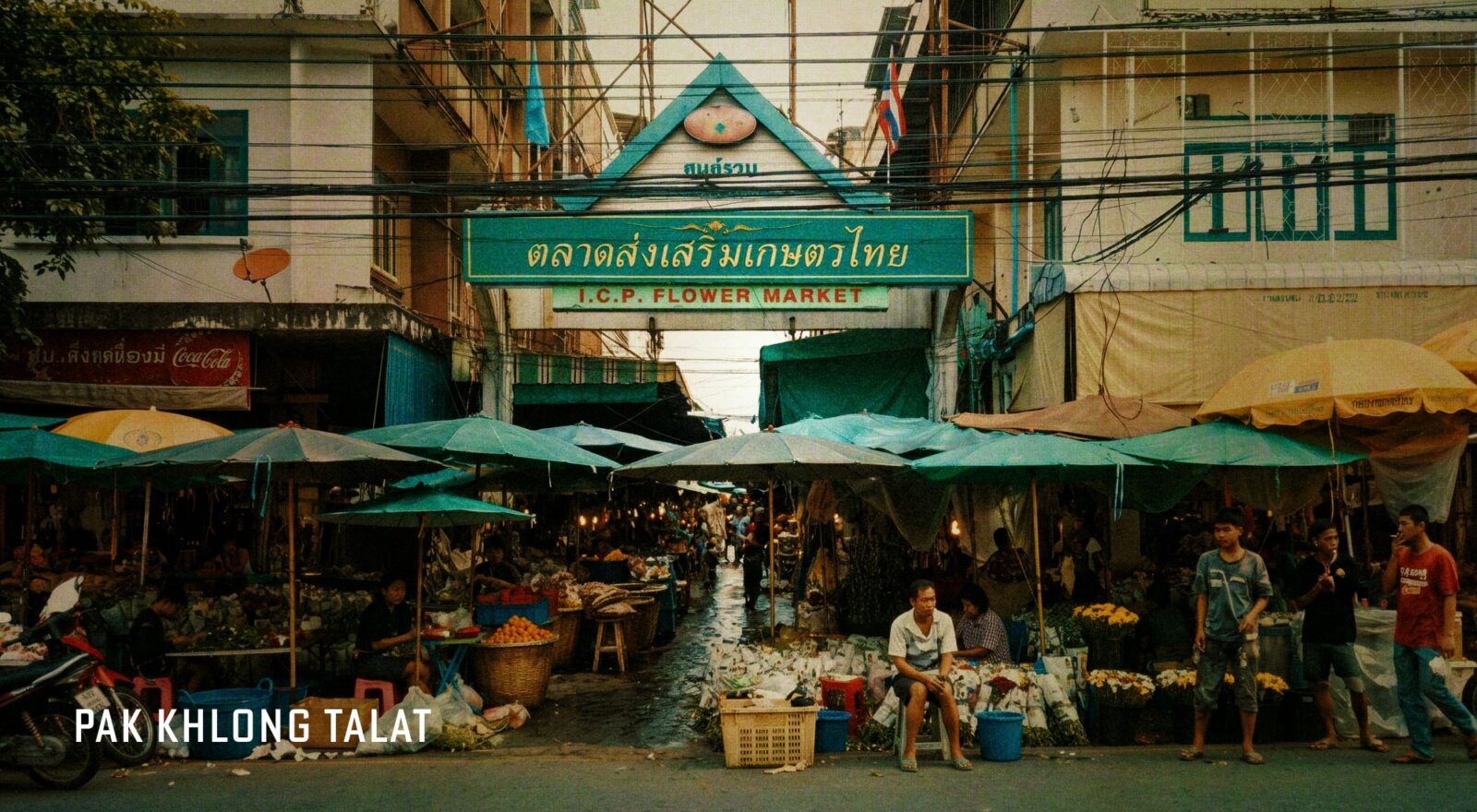
Pak Khlong Talat is Bangkok’s great 24-hour wholesale flower market. The area once traded in fish and produce before evolving into a flower market in the late 1950s. It is especially active before dawn, when fresh flowers arrive for temples, hotels, weddings, and vendors across the city.
In CHOKE POINT, Harvath and Morrell need somewhere public, crowded, and anonymous where they can disappear into the background, and the flower market becomes the perfect location.
What fascinated me was putting covert activity in the middle of such a colorful, fragrant place. Flowers and garlands spill across the market while vendors and delivery trucks keep it moving through the night.
That’s one of the things I love most about thrillers: taking a beautiful, completely real place and allowing the reader to see it through an entirely different lens.
4. CHAO PHRAYA RIVER / EXPRESS BOAT / SATHORN PIER
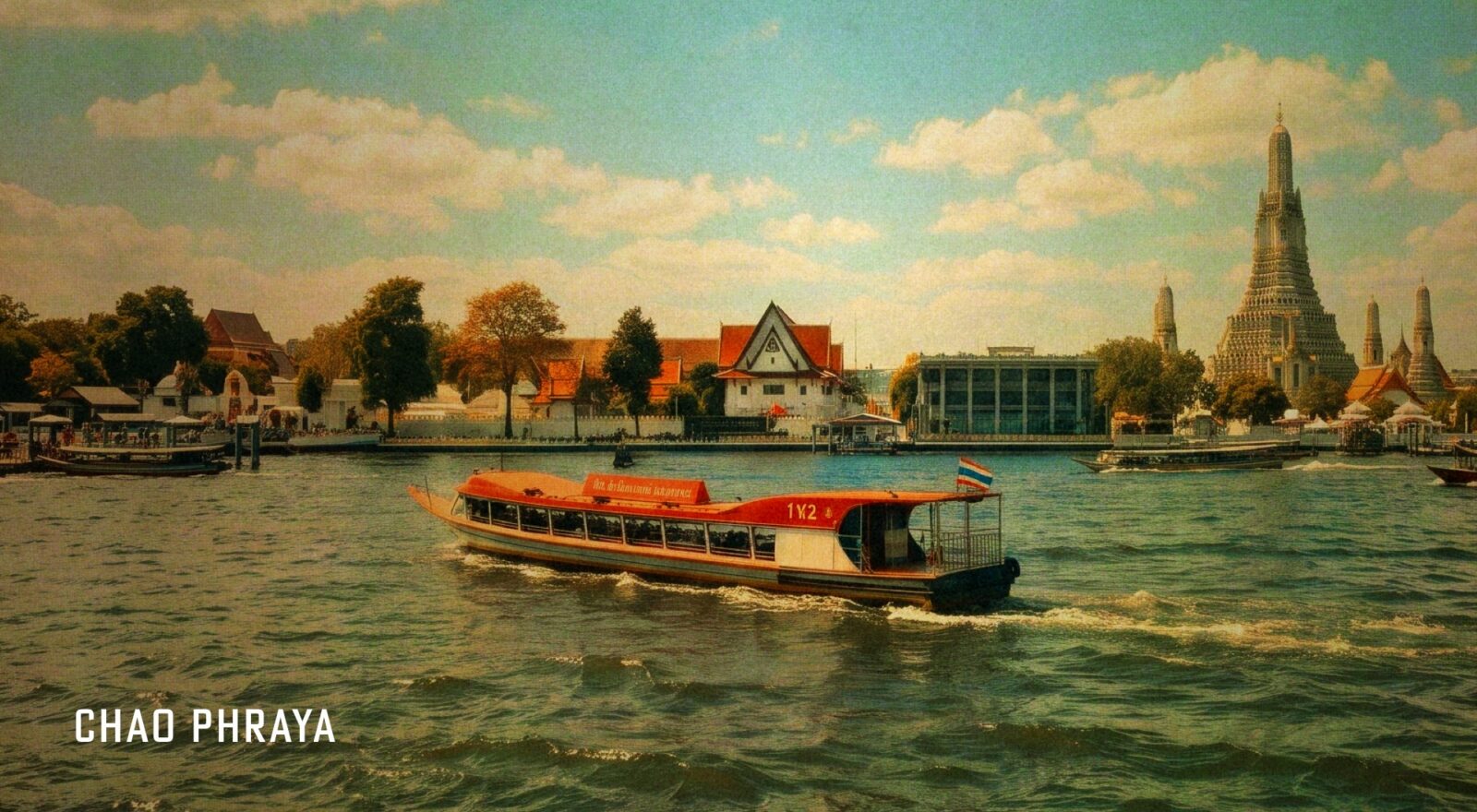
One of the best ways to understand Bangkok is from the Chao Phraya River.
The river isn’t simply scenery. It remains a working transportation artery through the heart of Bangkok. The Chao Phraya Express Boat has been operating since 1971, carrying residents and visitors between neighborhoods and major transit points along the river.
In CHOKE POINT, Harvath and Morrell need to move quickly across the city while security is tightening around them, so they use Bangkok’s river transportation system and take an express boat to Sathorn Pier.
I liked the scene because it lets readers experience a very real part of everyday Bangkok: people crowding onto the boats, longtails cutting across the water, and cargo barges moving more slowly past the city on either bank.
For a visitor, getting onto the river also changes your sense of Bangkok. From the water, the temples and old neighborhoods sit within sight of luxury hotels, modern towers, and a working waterfront.
5. KHLONG TOEI + THE LUCKY MONKEY
The Lucky Monkey is fictional, but the Bangkok surrounding it is very real.
I created the Lucky Monkey as the sort of slightly disreputable neighborhood bar that CIA officers and other interesting people might know — complete with chicken and waffles, strong coffee, and a DJ spinning funked-up yacht rock at breakfast.
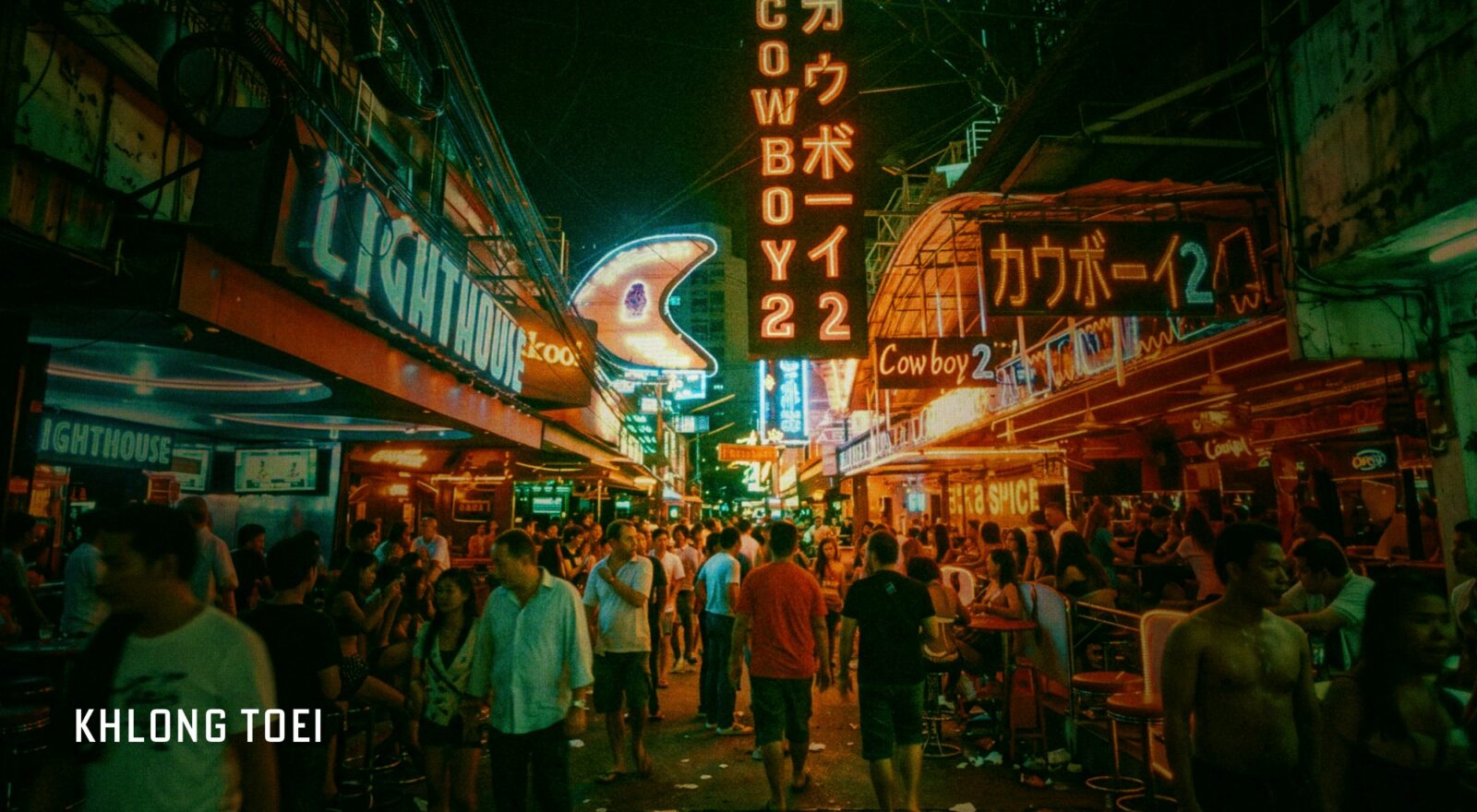
Harvath and Morrell then move deeper into Khlong Toei, where the neon and nightlife give way to freight operations, workshops, docks, warehouses, and Bangkok’s working port.
Bangkok Port was begun in 1938 to allow large seagoing ships to bring goods directly into the capital. World War II interrupted construction, which was completed after the war.
Khlong Toei mattered because I wanted readers to see a grittier, less polished version of the city. Bangkok isn’t only temples and rooftop bars. It’s also a huge working metropolis with neighborhoods and industries that tourists can pass very close to without ever really seeing.
6. LUMPHINI PARK + WIRELESS ROAD
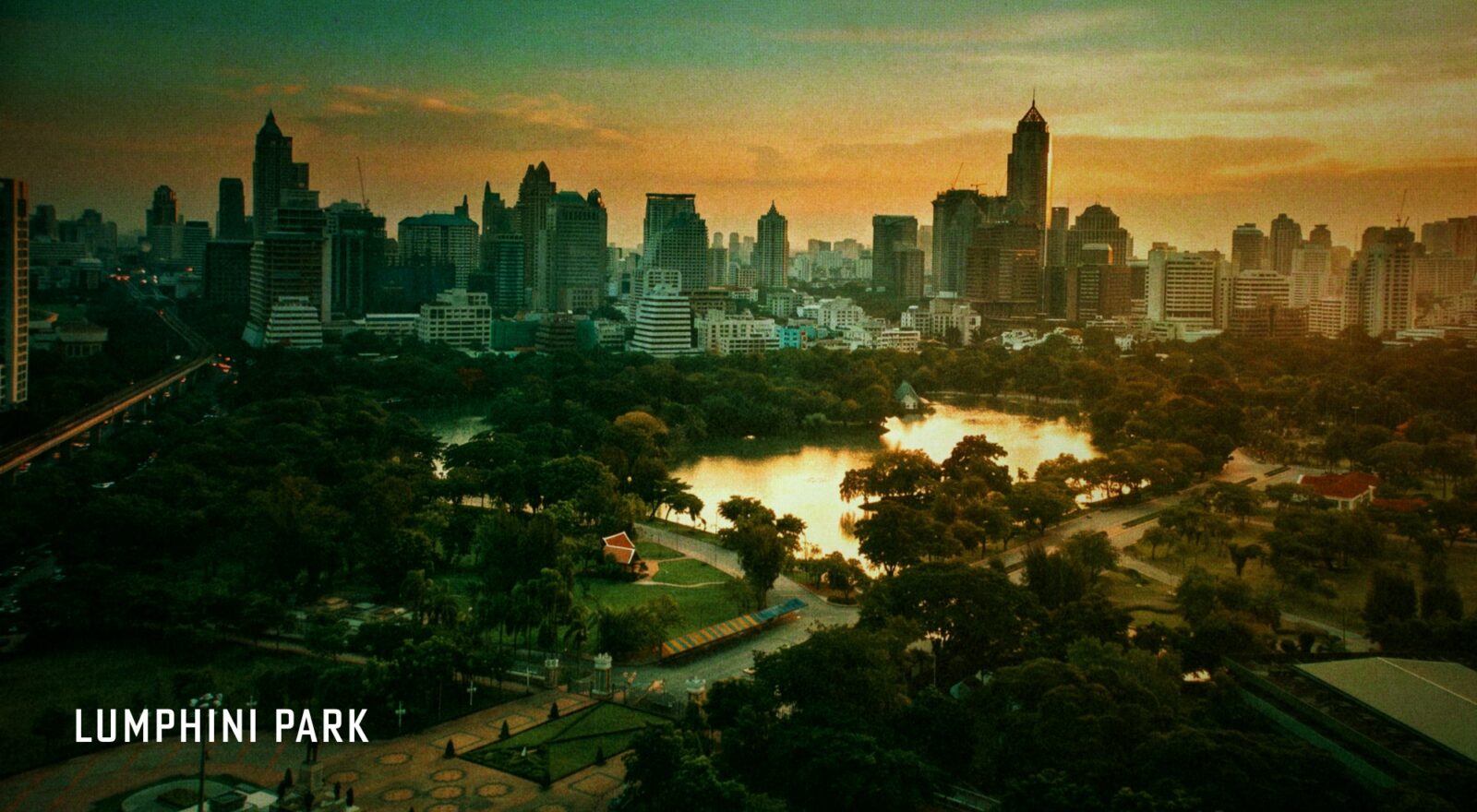
Lumphini Park gave me an opportunity to show yet another Bangkok.
After so much noise, traffic, violence, and claustrophobia, here is this large green space in the middle of the city filled with joggers, families, tourists, and people simply going about their lives.
Opened in 1925, Lumphini was Bangkok’s first public park. Early morning and late afternoon are especially good times to see it functioning as the city’s backyard, with runners circling the lake and people gathering to exercise or escape the surrounding streets.
Several important conversations in CHOKE POINT take place in and around the park.
Nearby Wireless Road also plays an important role because it is home to the U.S. Embassy in the novel.
One detail I loved discovering was why it is called Wireless Road: the area was associated with Thailand’s early wireless telegraph and radio operations. The country’s first radiotelegraph station began operating there in 1914, and the road’s Thai name, Witthayu, also means radio.
That became especially amusing because Harvath travels down Wireless Road while investigating a Breitling watch containing an emergency radio beacon.
The coincidence was almost too perfect.
7. RATTANAKOSIN — GRAND PALACE + WAT PHO / TEMPLE OF THE RECLINING BUDDHA
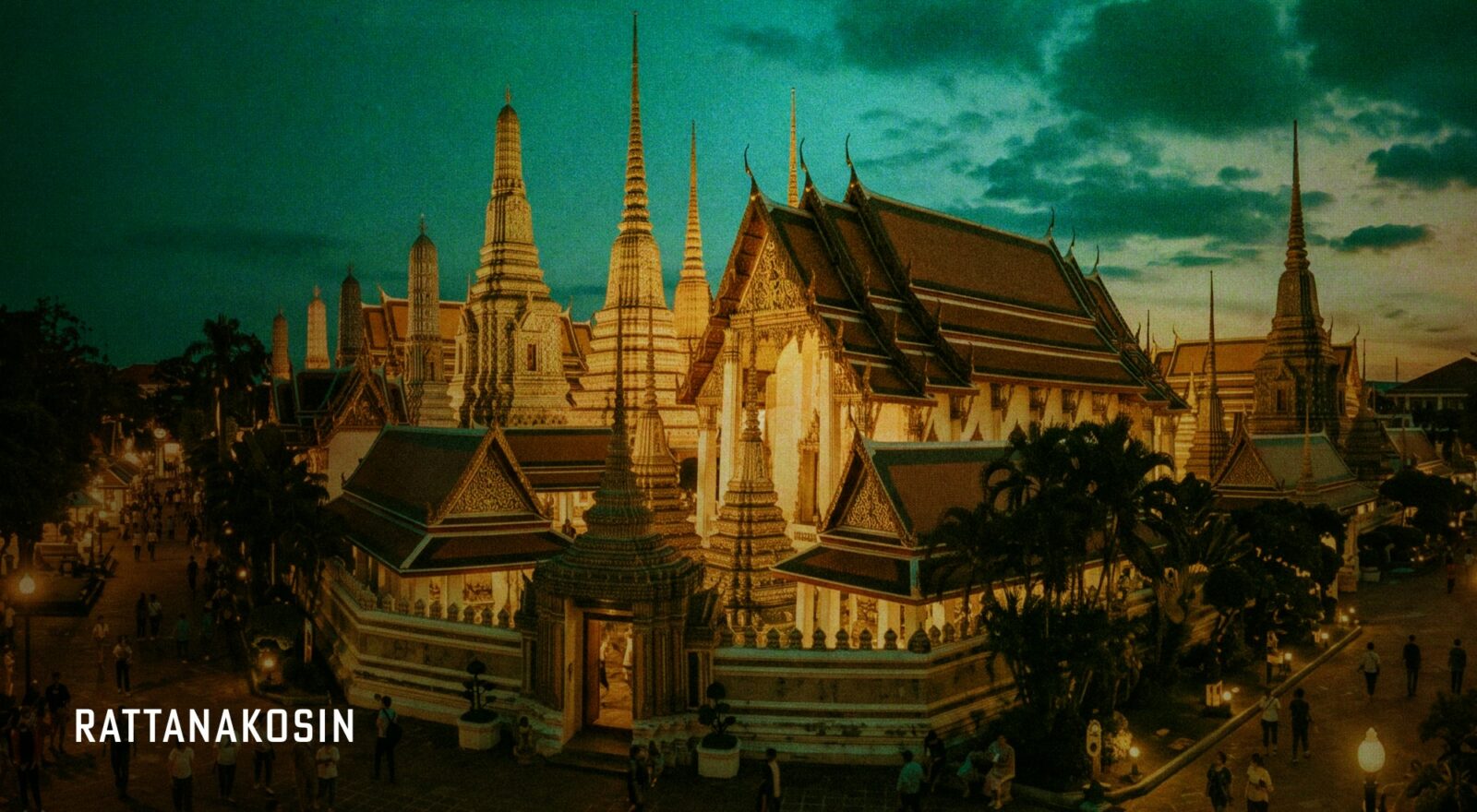
I couldn’t set a book in Bangkok without bringing readers into Rattanakosin, the city’s historic royal district.
This is where modern Bangkok began. In 1782, King Rama I established his new capital here and ordered construction of the Grand Palace, which became both the royal residence and the seat of government. Wat Phra Kaew, the Temple of the Emerald Buddha, sits within the palace complex.
Next door, Wat Pho reaches even further back. A temple stood on the site during the Ayutthaya period before Rama I began a major restoration in 1788. Today it is famous for its gilded Reclining Buddha, which stretches 46 meters through the temple.
Together, the Grand Palace and Wat Pho put you inside the royal and religious history that still shapes Bangkok rather than simply looking at it from a distance.
For anyone following CHOKE POINT to Bangkok, this is the part of the city I would tell them they absolutely should not miss.
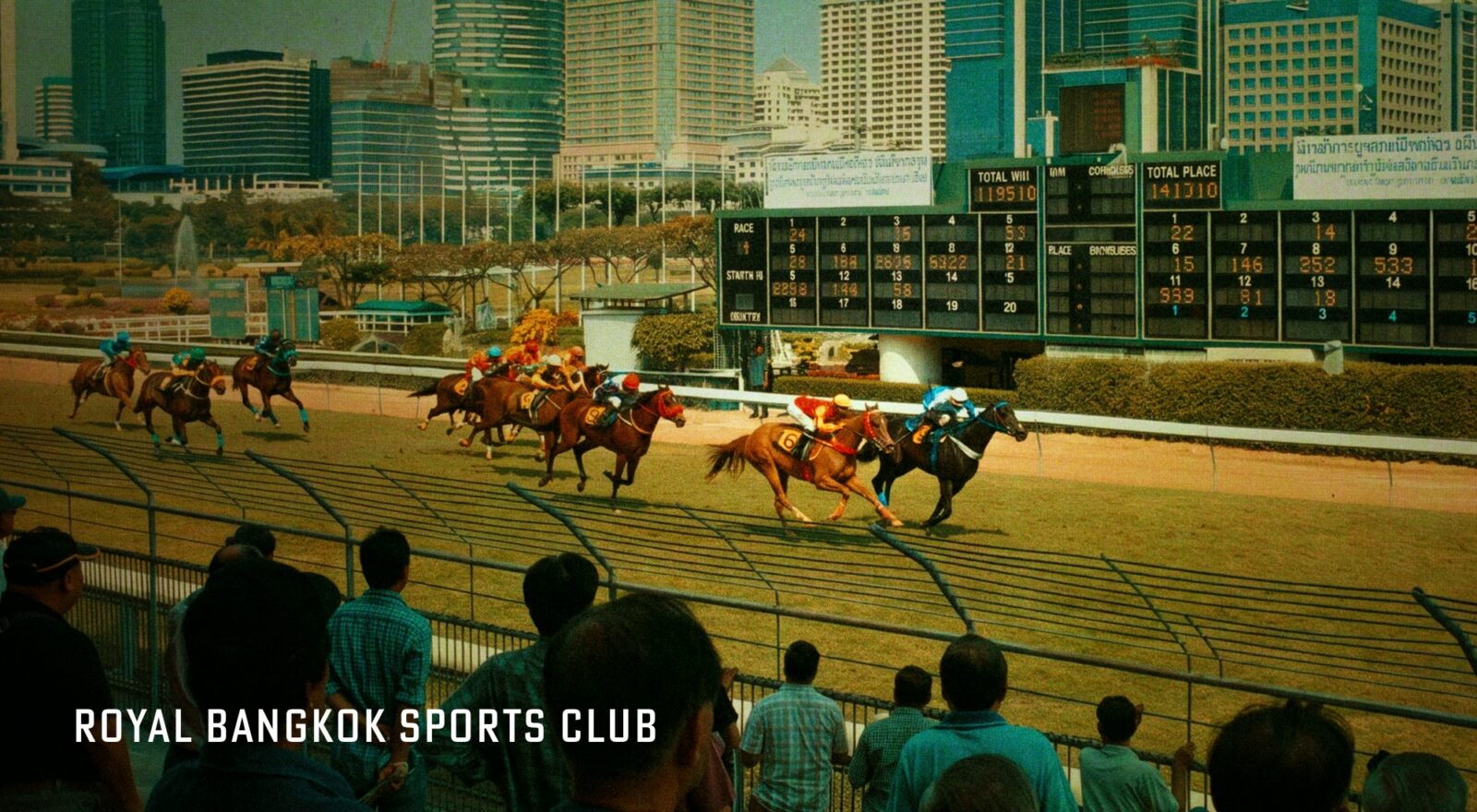
8. ROYAL BANGKOK SPORTS CLUB
The Royal Bangkok Sports Club plays an important role in CHOKE POINT because it represents something very different from Bangkok’s tourist districts.
It is an old, prestigious institution associated with the Thai establishment — a world of government, business, diplomacy, and old families. That made it symbolically important to the story.
The piece of history I found most fascinating is that the club dates to 1901, when King Chulalongkorn granted it a royal charter. Even more surprising, in 1911 the first airplane ever seen in Thailand took off from the club’s grounds for a demonstration flight.
The RBSC remains private, which is part of what interested me. It represents a Bangkok most visitors never really enter: old, connected, and institutional.
I love details like that. You can pass a place in a modern city without realizing how much history has unfolded on the ground beneath your feet.
If CHOKE POINT makes you want to see Bangkok for yourself, these are good places to start.